Which plants grow well together in a terrarium?
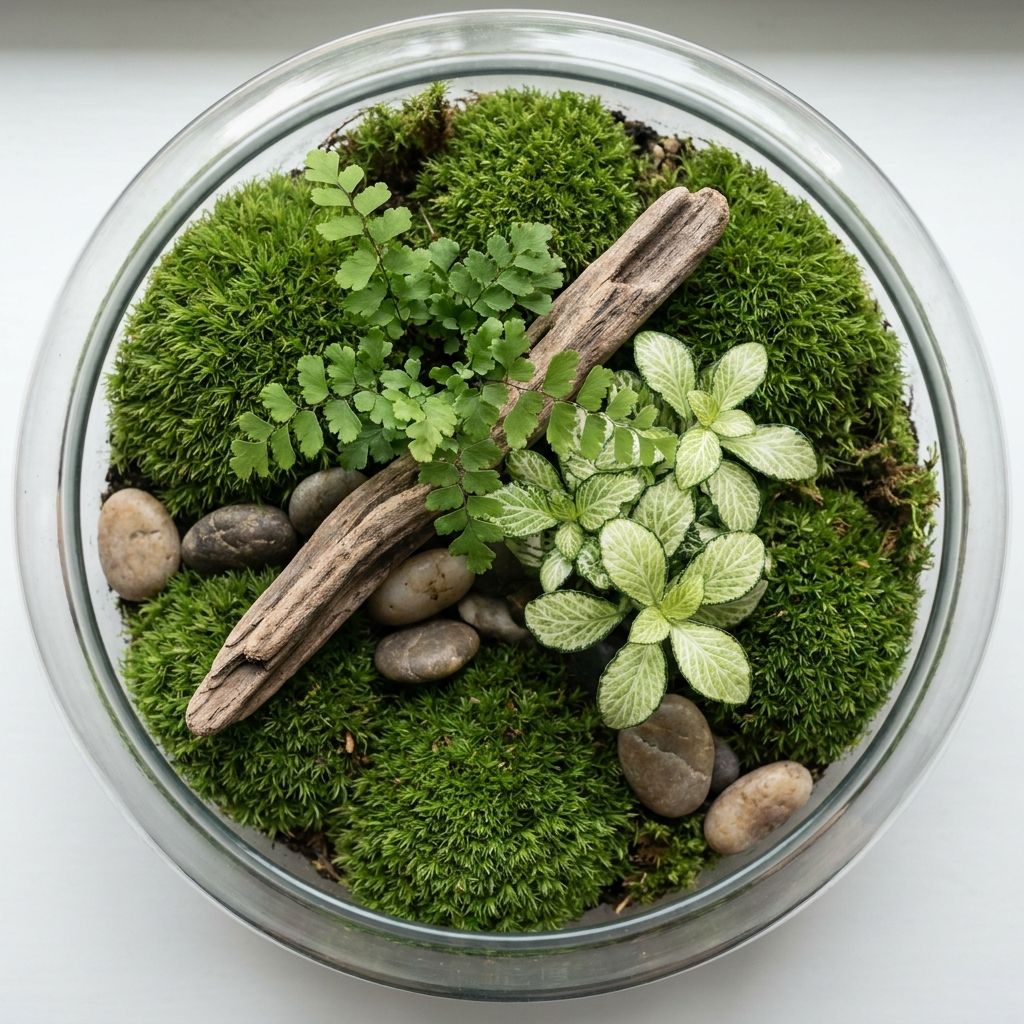
Put together plants that want the same humidity, light and water, not plants that merely look good side by side. The most common failure is mixing a species that wants it wet with one that wants it dry, in which case one of them is always losing.
Most terrariums that fail did not fail because of care. They failed at the shopping stage, because the plants inside wanted different things and no single set of conditions could satisfy both.
The single rule
Sort by conditions, not by looks.
Every plant in a closed terrarium lives in the same air, the same substrate moisture and roughly the same light. You cannot water this one twice a week and that one once a month. Whatever you set, they all receive.
Before anything else, sort your candidates by three things:
- The humidity they want
- The light they want
- How wet they want their roots
Plants that agree on all three will live together. Plants that disagree on any one of them will give you a terrarium where something is always struggling.
Humidity is the one that catches people out most often, so it is worth knowing the range a closed terrarium actually sits in before you buy anything.
Combinations that fail reliably
- Succulents or cacti with tropical plants. The single most common mistake. One wants dry air and dry roots. The other wants neither. In a closed terrarium the succulent loses, usually by rotting.
- Air plants in a sealed, wet terrarium. They need airflow and a real chance to dry out after a watering, within a few hours rather than a few days. Leave them in still, saturated air and they rot from the base.
- A fast, vigorous grower with slow miniatures. Not a conditions clash, a time clash. Something like a vigorous creeping fig will simply bury a small moss carpet within a few months. It only works if you are willing to prune constantly.
- Anything that wants a cold winter rest with anything that does not. Some carnivorous plants need a genuine cool dormancy. Tropical plants do not want to spend winter cold.
Sets that usually work
A classic tropical floor. Cushion moss as the ground layer, a fittonia or two for colour, a small fern for height, and a creeping fig if you are prepared to prune it. All of them want humid air, indirect light and evenly damp substrate.
A moss and stone landscape. Several moss species, a piece of wood, one small fern. Slow, forgiving, and the simplest thing to keep looking good for years.
A carnivorous bog. Sundews, a Venus flytrap, and sphagnum. All want it wet, bright and low in nutrients, and they all want distilled or rainwater rather than tap. This is a genuinely different setup from a tropical terrarium, not a twist on one.
A single specimen. One good plant, well placed, with moss around it. Simpler than a mixed planting and often better looking.
Two practical notes to keep
Leave room. A terrarium planted to look finished on day one is overplanted by month three. Plants get bigger. Plan for what they will become, not what they are.
Nutrient levels matter more than people expect. Carnivorous plants have evolved for poor, acidic soil and will suffer in a rich substrate that suits tropical foliage. That is one reason the two groups are usually kept apart rather than mixed.
If something starts to struggle all the same
Even a well matched planting will have an off month. Read the leaves first: browning at the edges means something quite different from spots in the middle, and knowing which is which stops you changing the wrong thing.
It also helps to know what you planted and when. Give each one its own journal and a year later you can see which combinations actually worked in your house, rather than trying to remember.
If you would rather the conditions simply held themselves steady while the planting settles in, that is the job the verdIQore terrarium system does.
Related questions
Can I put succulents in a closed terrarium?
No. Succulents and cacti want dry air and dry roots, and a sealed container holds moisture near saturation. They rot, usually within weeks. Want succulents under glass? Use an open container with free draining soil and plenty of light.
How many plants should go in a terrarium?
Fewer than looks right on the day you plant it. Anything that looks full straight away will be overcrowded within a few months. Plan for the size the plants will reach, not the size they are in the pot, and leave visible gaps.
Where should I put my terrarium?
Beside a bright window, but out of direct sun. Most terrarium plants want medium, indirect light. Direct sunlight through glass turns a closed terrarium into an oven very quickly.
Can I mix carnivorous plants with normal terrarium plants?
Usually not, and the reason is the soil rather than the air. Carnivorous plants evolved for poor, acidic, low nutrient ground and suffer in the richer substrate that suits tropical foliage. They also want rainwater or distilled water rather than tap. Keep them as their own setup.
What is the easiest terrarium planting for a beginner?
Moss with one small fern, or a single good plant with moss around it. Both grow slowly, forgive small mistakes, and stay looking right for years without much intervention. Mixed plantings look prettier on day one and need more work by month six.
Last updated 2026-08-26